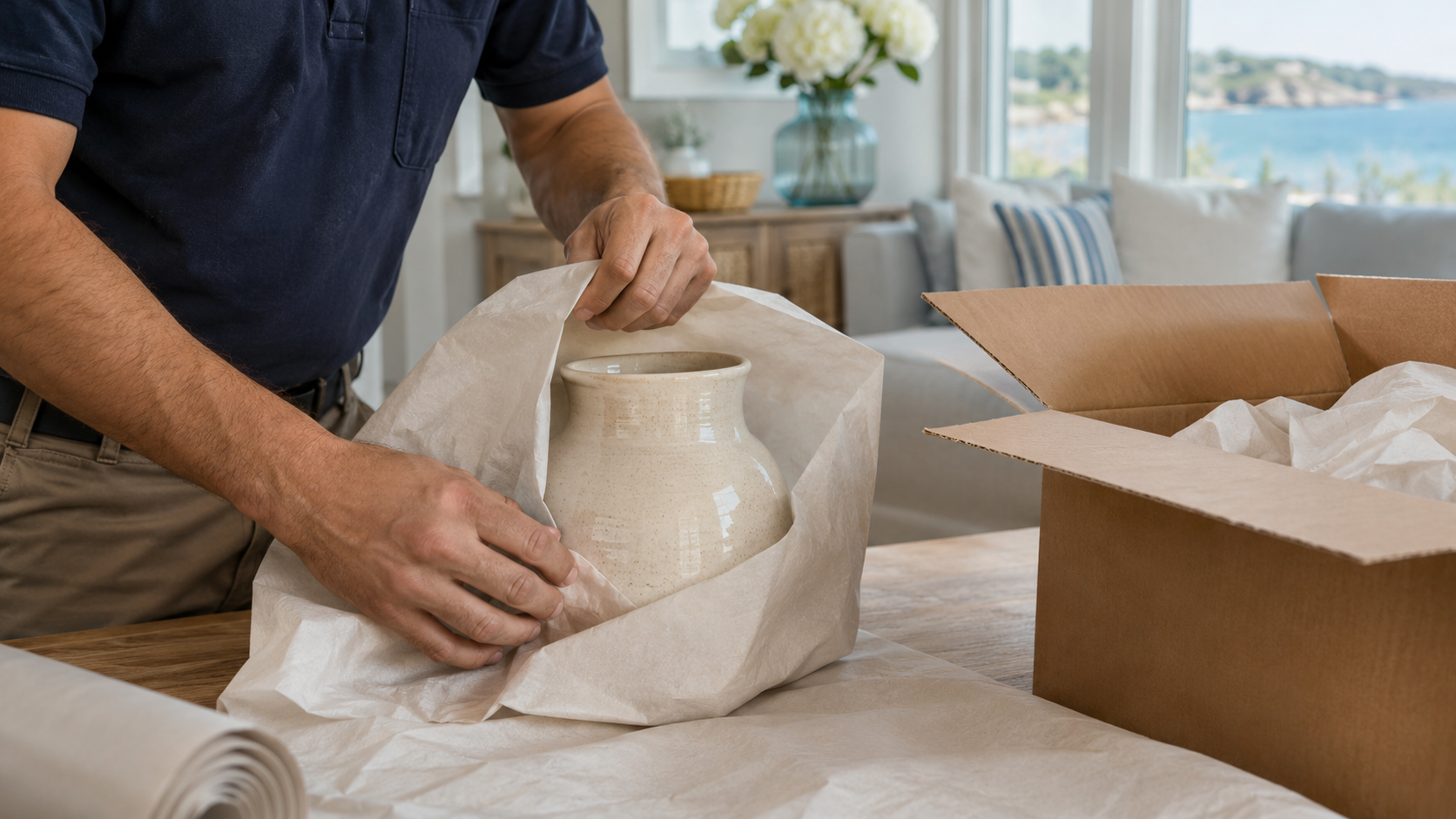
Choose the amount of help that fits the move
Packing can be organized as a full household service, help with selected rooms or support for individual fragile pieces. Begin by deciding what you want someone else to handle and what you prefer to pack yourself. Describe that division clearly when requesting estimates. A kitchen filled with glassware and small appliances involves different work from a bedroom containing mostly clothing. Tell the mover about both the quantity and the type of belongings so the proposal reflects the actual scope.
Ask whether packing is performed before moving day or within the same visit. Clarify who supplies materials, how unused materials are handled and whether unpacking means opening cartons, placing contents or removing empty packaging. These terms can describe different services. Write down the agreed tasks rather than assuming a service title explains them. A practical packing plan gives each item an owner and a deadline, reducing the chance that several unfinished rooms delay the rest of the move.
Sort before you ask someone to pack
Professional packing does not automatically decide what should move. Walk through cupboards, drawers and storage areas before the packing appointment. Remove belongings that will be donated, discarded or given to someone else. Separate documents, medications, keys, valuables and personal essentials that travel with you. Mark any furniture or appliances that stay. If an item must remain accessible, move it to a clearly identified area and explain the arrangement directly to the packing team.
Sort mixed drawers carefully. A desk drawer can contain useful supplies, personal records, loose batteries and objects the mover does not accept. Do not leave that decision to someone unfamiliar with the contents. Check the company's list of excluded materials and make appropriate arrangements for them. When a household member is still deciding about possessions, finish that discussion before the team arrives. Packing works best when it begins with an agreed inventory, not a collection of unanswered questions inside every cabinet.
Match containers to contents
Container size should reflect weight and fragility. Dense belongings need manageable boxes, while lighter linens and soft goods can use larger containers. Ask the packing provider which materials are appropriate for the items in your inventory. Specialty cartons or custom protection may be suitable for particular objects, but the need should be explained rather than assumed. Describe unusual shapes, delicate finishes and items that cannot safely bear weight.
For self packed cartons, use containers that close securely and remain stable. Fill empty space so contents do not shift, and protect individual fragile pieces rather than relying only on a padded box wall. Avoid combining heavy tools with breakable household items. Label the top and a visible side with the room and a useful contents description. Keep the labeling consistent across everyone helping. A plain label that says kitchen dishes is more useful than a private abbreviation nobody at the destination understands.
Give the kitchen its own plan
Kitchens often contain many small objects with different handling needs. Sort cabinets first, then separate pantry goods, dishes, cookware, utensils and appliances. Check which food items the mover accepts and consider the duration and conditions of the move. Do not pack leaking containers or temperature sensitive food as ordinary dry goods. Set aside enough supplies for simple meals until departure, and identify what you will need immediately after arrival.
Discuss fragile dishes, stemware and serving pieces with the packing team. Remove loose accessories from appliances when appropriate and keep parts identified. Clean and dry items before packing them, especially anything that may sit enclosed for a while. Avoid hiding sharp tools in mixed cartons without clear protection and labeling. During unpacking, place essential cookware and everyday dishes first. Decorative serving pieces can wait. A kitchen becomes usable through a small set of practical items, which is a better first target than completely filling every cabinet.
Protect artwork, mirrors and delicate possessions
Describe artwork, mirrors, glass tabletops and fragile decorative items before the estimate is finalized. Provide dimensions, materials and any handling instructions you already have. Ask whether the company provides the necessary packing or whether a specialist is appropriate. Do not assume that ordinary household cartons suit every object. The right plan depends on the piece itself, the route and the services being arranged.
Photograph important items before packing and record existing condition concerns. Keep relevant documentation with your personal move folder. Ask how packed items will be identified and how to report questions after delivery. If you pack a fragile piece yourself, tell the mover how it is enclosed and avoid overstating the protection. A fragile label helps communicate attention, but it does not replace suitable materials or a secure container. Keep irreplaceable small possessions with you when appropriate and make a deliberate plan for anything you would find difficult to replace.
Prepare clothing, books and personal rooms
Sort clothing by what you need during the move and what can be packed early. Ask whether wardrobe containers are included or available, and clarify how hanging clothes will be handled. Keep shoes clean and separate from delicate fabrics. Label linens by the room where they will be used, and set aside bedding for the first night. A clearly marked bedroom essentials carton can save considerable searching after a long day.
Pack books in manageable quantities and use containers suitable for their weight. Avoid filling a large carton simply because more books fit inside it. For children's rooms, separate a small set of familiar items for personal travel and explain what will happen to the rest. In home offices, remove sensitive documents and back up important digital files before devices are packed. Personal rooms contain more than furniture, so take time to identify information, routines and sentimental objects that need a different plan from ordinary household goods.
Clarify furniture preparation and electronics
Ask which furniture pieces require disassembly and who performs that work. Identify adjustable beds, shelving systems, desks and other pieces with components that must be handled in a particular sequence. Keep available instructions and label hardware according to the mover's guidance. Do not dismantle a complicated item based only on guesswork. If a qualified technician is needed for an appliance or specialized equipment, arrange that service separately when it is outside the mover's scope.
Photograph electronic connections before disconnecting cables, then label the accessories that belong together. Back up important information and keep passwords or sensitive documents out of the shipment. Ask how screens and other delicate devices should be protected. Original packaging may be useful when suitable and available, but confirm the handling plan with the provider. Keep essential chargers and a device needed for move communication with you. A carefully packed office is less useful if the only phone charger is buried in a sealed carton during delivery coordination.
Keep South Florida conditions in mind
Plan a dry indoor staging area where practical and keep packed belongings away from places exposed to rain. South Florida moves can involve warm loading areas and changing weather, so discuss items that are sensitive to heat or moisture before packing them. Ask what conditions the proposed transport or storage provides rather than assuming a particular environment. Personal transport or a specialist arrangement may be appropriate for certain possessions.
For apartment and condominium packing, confirm how materials and completed cartons may move through shared spaces. Do not use corridors as a staging area without the property's authorization. Keep access routes clear and ask whether packing appointments have separate building instructions from moving appointments. In houses, make sure the workspace leaves exits and essential rooms usable. Good materials matter, but their benefit is reduced when packed boxes sit in an unsuitable place or block the route needed to carry them out.
Make unpacking a defined service
Unpacking can mean different things, so agree on the result before booking. Ask whether the team will open boxes, remove wrapping, place belongings on surfaces, organize cabinets or remove debris. Explain which rooms matter first and which items require your own placement decisions. If a kitchen organization plan is important, prepare it before the appointment. Otherwise, someone may need to stop repeatedly to ask where each category belongs.
At delivery, identify safe areas for opened cartons and keep the main carrying route clear until furniture is in place. Check fragile items in a manageable sequence and document concerns through the mover's stated process. Retain materials needed to explain a specific issue until you understand the reporting requirements. Do not schedule so much unpacking at once that the home becomes covered with loose contents. A room by room sequence makes it easier to notice missing parts, locate essentials and finish with spaces that are ready to use.
Review the final scope before packing starts
A short confirmation can prevent substantial confusion. Recheck the inventory, the rooms included, the materials, the appointment time and the belongings that remain with you. Tell the provider about new purchases, extra storage spaces or fragile items that were not visible during the estimate. Ask how changes are approved and documented. Keep a copy of the agreed scope so you can distinguish included work from a new request.
Before the team leaves, walk through the packed areas and confirm that excluded belongings remain accessible. Check closets, lower cabinets and storage corners that are easy to miss. Make sure cartons are labeled and the next stage is clear. Packing is successful when the contents are protected, identifiable and ready for the planned move. Unpacking is successful when the household can use its rooms again. Defining those results at the start helps you select the right amount of help and recognize when the work is complete.
Make labels useful to someone who has never seen the home
Choose room names that match the destination and write them consistently. If two bedrooms belong to different people, add a clear distinction that appears on the room signs. Give mixed cartons a short contents description rather than writing miscellaneous on every box. Identify containers that need early access, but reserve that label for a limited group. If everything is marked urgent, the label no longer helps the unloading sequence.
Keep a simple carton record for belongings that would be difficult to locate or replace. This does not require cataloging every spoon. It can be a short note that identifies where important accessories, documents or furniture components were packed. Make the record available outside the shipment. Good labels let the crew place containers correctly, while the household record helps you find the contents after the cartons have reached their rooms.
Discuss unfinished packing before moving morning
If packing is behind schedule, contact the mover with an accurate description of what remains. Identify the rooms, quantities and types of belongings still unpacked. Ask whether additional assistance is available and how it changes the service. Do not describe a full kitchen as a few loose items or assume that the crew can add several hours of work without affecting another appointment. Clear information gives the company a chance to explain realistic options.
If relatives or friends help finish, give them the same packing and labeling instructions. Keep excluded materials and personal essentials separate. Check completed cartons for secure closures and useful labels before they join the shipment. The goal is readiness for the agreed move, rather than the appearance of progress from a large stack of poorly identified boxes. A timely conversation about unfinished work is easier to resolve than an unexpected packing task discovered after the truck arrives.
Before sealing the final cartons, check whether any instructions, remote controls or small accessories belong with furniture already prepared. Label them clearly and follow the agreed transport plan. Keep a short written list of items packed at the last moment so you can find them at arrival. These containers often hold the supplies used most recently, which may also be needed first. A final label check is worthwhile even when most packing has been completed by a professional team working from a clear room plan.